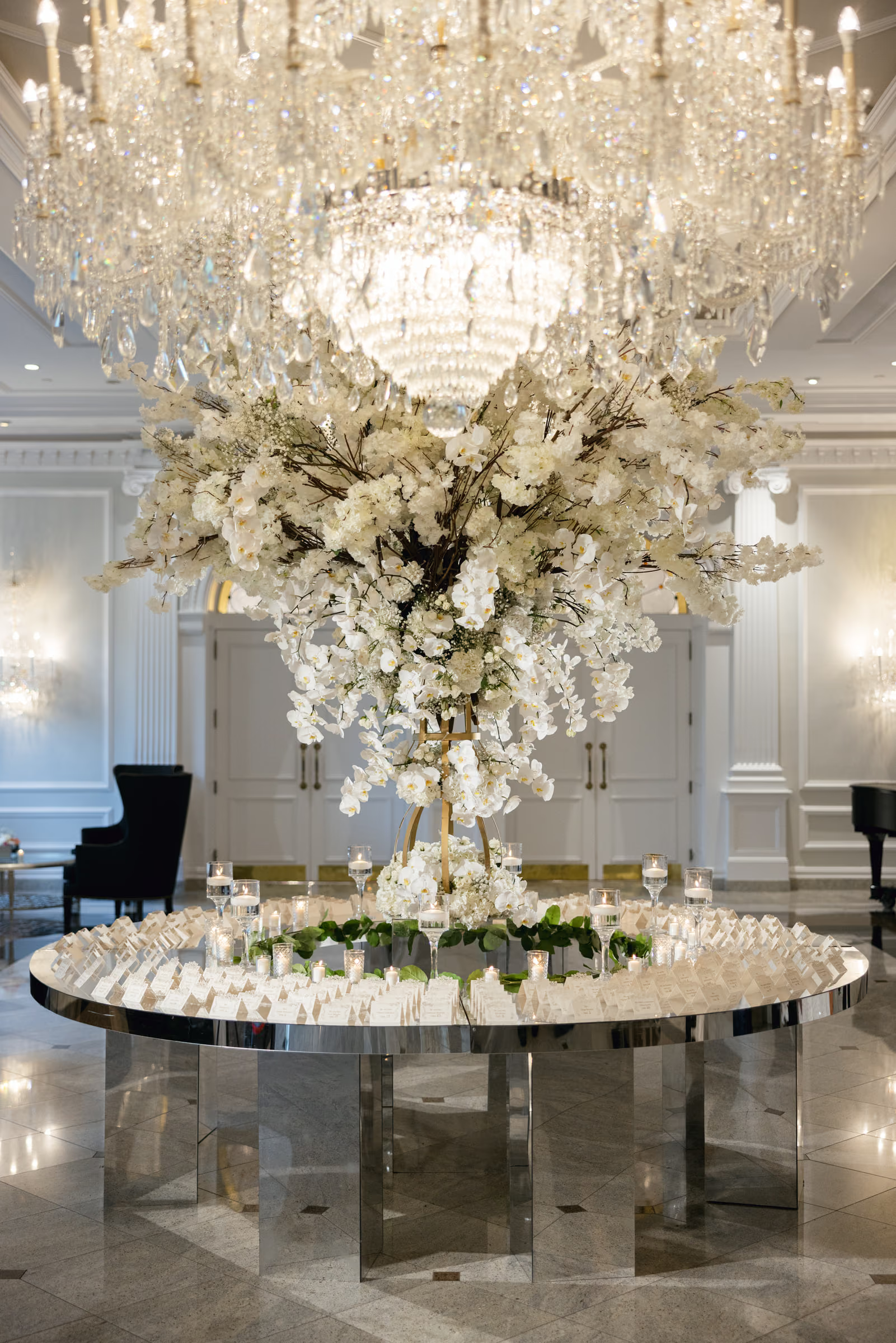
Cousins, college friends, colleagues, the neighbors you grew up with, and two families who may be meeting for the first time. Long before dinner is served, every guest arrives at the same question: where am I sitting? For some it hardly matters. For others it decides the evening.
These are the principles we use when we build a seating plan with a couple.
Seat people who will enjoy each other
Think in conversations, not in categories. Put guests together who share a language, a history or an interest, and keep apart anyone with a known tension, as far apart as the room allows. When two families come from different countries, mixing them a little at each table, with someone at every table who can bridge the conversation, does more for the evening than any speech. Our page on international families covers how we plan for families from abroad.
Think about older guests
Seat grandparents and older relatives away from the speakers and the band, with an easy route to the restrooms and the exit, and close enough to the couple to see the toasts. Ask before assuming: some of them would much rather be near the dance floor.
Children
Unless parents ask otherwise, or the children are very young, older children usually have more fun at a table of their own. A flower girl or a ring bearer, though, belongs with their parents. If you are deciding whether to invite children at all, we wrote about adults-only weddings.
No singles table
A table made up only of single guests is awkward for everyone at it. So is one single guest at a table of couples and their families. Seat single friends among friends.
Escort cards, place cards and the seating chart
Guests need to find their table without searching. An escort card for each guest, or a clear seating chart, is essential. Place cards at each seat are optional, though we like them, because they let you decide exactly who sits next to whom.
If you use a chart, make it easy to read: a type large enough for your grandmother, in a style that suits the wedding, placed where guests pass on their way in, not at the far end of the cocktail hour. For a large wedding, escort cards spread across a table work better than a single chart, because they do not create a crowd.
Help guests to their seats
At a large wedding, a few people from the planning team or the venue guiding guests to their tables keep the room moving and the first course on time. It looks like a small detail. It is the difference between a calm room and a queue.
Leave it until the replies are in
Build the plan once the final replies are in, usually two to three weeks before the wedding, and expect to change it more than once. Managing replies, seating and late changes is part of every full planning engagement, and it is one of the things couples are most relieved to hand over.